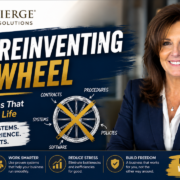
Tag Archive for: business freedom

Posts

Five Years Ago, I Stopped Chasing Growth And Everything About My Business Changed

Five years ago, I wasn’t trying to predict the future.

I didn’t see a global pandemic coming.
I didn’t anticipate the explosion of AI, remote work, or the massive shifts in how businesses operate today.

What I did discover, almost by accident, was something far more valuable.

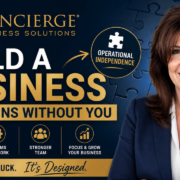
Operational independence.

At the time, it didn’t feel revolutionary. It felt like relief.

For years, my business worked only because I never stopped. Every decision flowed through me. Every question landed on my desk. Every risk lived in my head. I was indispensable, and exhausted.

Eventually, I reached a point where I could no longer ignore the cost of being the system.

So I made a different choice.

I documented decisions.
I built systems.
I removed myself as the default answer.
I designed the business to function without constant oversight.

The real test came when I left the country for three weeks.

There were no emergencies.
No frantic calls.
No fires to put out.

The business ran.

That was the moment everything clicked.

Freedom is not accidental. It is designed.

That realization has shaped everything I have built since, from operational frameworks to education programs and vetted professional networks. It also fundamentally changed how I think about the future of business.

As we move toward 2026, three shifts are becoming impossible to ignore, especially for service-based and lifestyle-driven businesses.

Prediction 1: Operational Independence Will Replace Growth as the Real Measure of Success

For decades, growth was the goal.

More clients.
More revenue.
More complexity.

By 2026, a different question will matter more:

“How well can this business run without me?”

Burnout has lost its appeal.
Exhaustion is no longer impressive.
Being indispensable is starting to look like a liability, not a badge of honor.

The strongest businesses going forward will not be the biggest. They will be the least dependent.

That means:

• Clear systems instead of heroic effort
• Documented decisions instead of constant interruptions
• Teams empowered to think, not wait
• Owners who can step back without fear

In lifestyle management and professional services especially, we are seeing a shift toward intentional businesses. Companies designed to support a life, not consume it.

In 2026, success will not be measured by how much you do.
It will be measured by how little you have to do.

Prediction 2: AI Will Expose Business Design, Not Fix It

AI is everywhere right now. The conversation is loud and often reactive.

Will it replace jobs?
Will it eliminate roles?
Will it change everything?

Yes. But not in the way most people expect.

AI does not fix broken businesses. It amplifies whatever already exists.

If your processes are clear, AI becomes leverage.
If your business lives in your head, AI becomes another source of chaos.

Owners without structure will:

• Add tools without clarity
• Chase efficiency without design
• Feel more pressure, not less

Owners with strong systems will:

• Reduce administrative drag
• Improve consistency and communication
• Free up human time for human work

In service-based businesses, judgment, presence, relationships, and trust cannot be automated.

By 2026, AI will not replace business owners.
It will reveal whether their business was ever designed to run.

Prediction 3: Trusted Networks Will Outperform Algorithms

As technology gets smarter, discovery gets noisier.

Search results feel less reliable.
Reviews are easier to manipulate.
Content is increasingly synthetic.

In response, people are turning back to trust.

In 2026, who you trust will matter more than what you can search.

We are already seeing this shift in:

• Concierge and lifestyle management
• Estate and property services
• Real estate-adjacent industries
• High-touch professional services

When the stakes are high, algorithms are not enough.

Vetted networks, peer referrals, and professional standards will outperform open platforms and unfiltered directories. Reputation will become portable through trusted ecosystems, not dependent on star ratings or SEO hacks.

This is not a step backward.
It is a correction.

The Common Thread: Design Over Hustle

These trends are not separate. They reinforce one another.

Operational independence enables smart use of AI.
AI rewards clarity and structure.
Trusted networks reduce noise and risk.

Together, they point to a future where intentional business design wins, and growth without infrastructure becomes a liability.

Five years ago, I did not know I was preparing for this moment.

I simply knew I wanted my business to breathe without me holding it together.

That quiet, practical decision turned out to be the most future-proof move I could have made.

Looking Toward 2026

If your business feels heavy right now, you are not failing.
If growth has made things harder instead of easier, you are not alone.
If AI feels promising but overwhelming, that is normal.

You are not behind.

You are right on time.

The future does not belong to the busiest owners.
It belongs to the most intentional ones.

Read our latest newsletter HERE.

Why You Wouldn’t Want an ERP System for Your Business

Let’s face it—running a business is stressful, chaotic, and often overwhelming.

And isn’t that part of the fun?

Who needs a system to make things easier when you can juggle endless tasks manually, miss deadlines, and burn the midnight oil just trying to stay afloat?

If you’re considering implementing an ERP (Enterprise Resource Planning) system like Essential Elements™, let’s explore why you might not want to do that.

1. You Love Being Overwhelmed

Picture this: you’re trying to locate an important client file, but it’s lost somewhere in the depths of your email inbox or buried in a stack of papers on your desk. The clock is ticking, the client is waiting, and your stress levels are skyrocketing. An ERP system would have that file stored securely in a centralized location, accessible in seconds.

But where’s the fun in that?

Chaos keeps your adrenaline pumping, right? If you thrive on that sense of urgency and enjoy searching for needles in haystacks, then an ERP system isn’t for you.

2. Who Needs Efficiency?

Your team spends hours every week manually entering data, reconciling spreadsheets, and double-checking calculations. Implementing Essential Elements™ would streamline these processes, automating repetitive tasks and reducing human error. But isn’t inefficiency part of your business culture?

After all, why finish work early when you can keep everyone at their desks well past closing time? Efficiency might lead to happier employees and more productive days, but that sounds suspiciously like progress.

3. Manual Processes Are a Badge of Honor

Do you enjoy piecing together reports from multiple systems?

Maybe it’s a point of pride that your financials require hours of manual calculations and cross-checking. Essential Elements™ integrates everything from time tracking and billing to client management, allowing for real-time reporting with the click of a button.

But wouldn’t it feel like cheating to let technology do the heavy lifting? If your spreadsheet wrangling skills are a source of personal validation, stick with the status quo.

4. Transparency? No Thanks

An ERP system offers a clear overview of your business at any given moment. Essential Elements™, for example, provides insights into your financials, employee productivity, and project statuses, empowering you to make data-driven decisions. 

But maybe you prefer the thrill of not knowing. Flying blind keeps things interesting, doesn’t it? Why bother with transparency when you can make decisions based on gut feelings and hope for the best?

5. Growth Is Overrated

You’ve built your business from the ground up, and it’s doing fine. Sure, you’d like to grow, but implementing an ERP system might make that growth too easy. Essential Elements™ eliminates bottlenecks, improves resource allocation, and supports scalability.

But why expand smoothly when you can experience the growing pains of outgrowing your current processes?

Struggling to meet demand and scrambling to onboard new clients are rites of passage, right?

6. Collaboration Is Overrated

Your team works in silos, and you like it that way. An ERP system fosters collaboration by providing a unified platform where employees can share information, track progress, and communicate seamlessly. 

But who needs seamless communication when misunderstandings and duplicate work can add a bit of excitement to your day? If you think “teamwork makes the dream work” is overrated, an ERP system might cramp your style.

7. You Prefer Reacting Over Planning

Your team works in silos, and you like it that way. An ERP system fosters collaboration by providing a unified platform where employees can share information, track progress, and communicate seamlessly.

But who needs seamless communication when misunderstandings and duplicate work can add a bit of excitement to your day? If you think “teamwork makes the dream work” is overrated, an ERP system might cramp your style.

8. Client Satisfaction Is Overhyped

A happy client is a loyal client—or so they say. Essential Elements™ enhances client satisfaction by streamlining communication, ensuring deadlines are met, and providing accurate billing.

But maybe your clients enjoy the unpredictability of your current processes. Who needs consistency and reliability when you can offer the thrill of uncertainty?

9. You Can’t Imagine Life Without Stress

Stress is a part of running a business, and maybe you’ve come to accept—or even enjoy—it. Implementing an ERP system like Essential Elements™ could reduce your stress by simplifying your operations, improving accuracy, and giving you more control over your business. 

But a stress-free life sounds boring, doesn’t it? If chaos is your comfort zone, an ERP system might just ruin everything.

 10. Work-Life Balance Is Overrated

Imagine being able to step away from your business without worrying about whether things are running smoothly. Essential Elements™ gives you the tools to automate tasks, delegate responsibilities, and maintain oversight, even from a distance.

But do you really want to take a vacation without checking your email 10 times a day? If you enjoy being tethered to your business, an ERP system might give you too much freedom.

In All Seriousness…

Of course, these points are tongue-in-cheek. The reality is, most businesses do benefit immensely from implementing an ERP system. Essential Elements™ was designed by a Lifestyle Manager to help business owners like you regain control, improve efficiency, and achieve greater success—without sacrificing your sanity. 

By centralizing your processes, automating repetitive tasks, and providing real-time insights, Essential Elements™ allows you to focus on what matters most: growing your business, delighting your clients, and enjoying your life.

If you’re ready to ditch the chaos and take your business to the next level, we’d love to show you how Essential Elements™ can help.

Schedule a demo today and see for yourself why you do want an ERP system for your business.


Thinking About Throwing in the Towel? Here’s Why You Shouldn’t Get a ‘Real Job’

Thinking About Throwing in the Towel? Here’s Why You Shouldn’t Get a ‘Real Job’

If you’ve ever been an entrepreneur for more than five minutes, you’ve probably hit that wall—the moment when you look at your to-do list, your dwindling bank balance, and your mounting stress, and think, “Why did I ever think this was a good idea?”

It’s a breaking point, and suddenly the 9-to-5 job you swore you’d never take starts to look strangely appealing. The predictable hours, the steady paycheck, the chance to clock out and leave your work behind at the end of the day—what’s not to love, right?

But let’s be real here. You know deep down that you’d last about a week in a “real job” before you were climbing the walls, frustrated by bureaucracy, and daydreaming about the business you walked away from. If you’ve ever found yourself in this position, you’re not alone. As entrepreneurs, we go through cycles of loving and hating what we do. The good news? There are ways to get back on track and fall in love with your business all over again.

Why a 9-to-5 Job Isn’t the Answer

When you hit that low point, it’s easy to romanticize the idea of working for someone else. It seems like a relief to leave the worries of payroll, marketing, client retention, and administrative nightmares to someone else for a change. But let me share a little secret: entrepreneurs don’t fit into a corporate mold. We’re wired differently.

1. You’re Used to Making the Rules

Remember why you started your business in the first place? You wanted the freedom to make decisions, to set your own schedule, and to follow your vision without someone breathing down your neck. Going back to a traditional job means giving up control, being told what to do, and asking permission for every little thing. You’ll be rolling your eyes during meetings and muttering, “I could do this better” under your breath before you know it.

2. You Thrive on Variety and Challenges

Entrepreneurs are problem-solvers. We get bored easily if we’re not being challenged. The predictability of a 9-to-5 job might seem like a welcome change at first, but once the novelty wears off, you’ll miss the variety and excitement of running your own business. When you’re in charge, every day brings a new problem to solve or a new opportunity to chase. It’s exhausting, sure, but it’s also exhilarating.

3. You Can’t Ignore Your Inner Voice

I’ve seen it time and time again. An entrepreneur hits a rough patch, decides to give up, and takes a “real job” out of desperation. Six months later, they’re miserable, starting to dream up new business ideas on their lunch break, and wondering why they ever left in the first place. You can’t shut off the entrepreneurial drive. It’s in your DNA. Even when it feels hard, the pull to create something of your own is stronger than the lure of a steady paycheck.

How to Fall Back in Love with Your Business

So, if the corporate escape plan isn’t the answer, what is? How do you get out of this rut and find your passion for your business again? Here are some strategies that have worked for me and my clients over the years.

1. Take a Step Back and Look at the Big Picture

When you’re knee-deep in the daily grind, it’s easy to lose sight of why you started your business in the first place. Remember your initial vision—the excitement you felt about building something from the ground up. Take a day (or a week, if you can) to step back, unplug, and reconnect with your purpose. One of my clients did exactly this. He was feeling burnt out and frustrated, ready to throw in the towel. I told him to take a weekend off, leave his phone at home, and spend some time doing the things he loved outside of work. By the end of it, he had clarity, new ideas, and a renewed sense of purpose.

2. Outsource the Tasks You Hate

One of the fastest ways to fall out of love with your business is to spend all your time on the parts you hate.

When I was first starting out, I did everything myself—bookkeeping, invoicing, newsletter creation, you name it. I was working 36-hour marathons and getting more frustrated by the day. It wasn’t until I hired a bookkeeper and outsourced my newsletter formatting that I got a taste of what freedom felt like.

Suddenly, I had time to focus on what I enjoyed—growing the business, coaching clients, and creating new programs.

If you’re stuck doing all the admin work, it’s time to delegate.

Trust me, the cost is worth the peace of mind.

 3. Reconnect with Your Clients

When you’re bogged down with paperwork and putting out fires, it’s easy to forget why you’re doing this in the first place—your clients. Take time to reach out and check in with a few of them. Ask for feedback. Hear their success stories.

 One of my favorite things to do when I’m feeling disconnected is to read through client testimonials or case studies. Seeing the tangible impact our services have had on their businesses reminds me why I started this company and reignites that fire.

4. Set New Goals and Challenges

 Sometimes, burnout isn’t about being overwhelmed—it’s about being underwhelmed. If your business has plateaued, it might be time to shake things up with a new project, product, or service. Set a big, audacious goal that excites you.

I did this with the launch of our software, Essential Elements™. It was a huge undertaking, and there were moments when I wanted to quit, but the challenge of building something innovative kept me going. Now, seeing how it’s transformed our clients’ businesses makes every sleepless night worth it.

5. Surround Yourself with Supportive People

Entrepreneurship can be lonely. When you’re struggling, it helps to have a circle of fellow business owners who get it. Find a mentor, join a mastermind group, or simply connect with a friend who understands the ups and downs of running a business.

One of my clients was ready to give up until she joined a peer group of entrepreneurs. Hearing their stories of struggle and success reminded her that she wasn’t alone, and it gave her the motivation she needed to keep going.


Does Your Business Enjoy Operational Independence?

We just returned from an incredible trip to Africa, and it was truly the vacation of a lifetime!

We explored South Africa, Zimbabwe, and Botswana, visiting breathtaking places like Motobos National Park, Chobe Game Reserve, Victoria Falls, and the Khama Rhino Sanctuary. 

Over our 12 days on the continent, we embarked on several safaris and boat rides, even spending one night in a tent under the stars.

We were incredibly fortunate to witness the Big Five (elephant, lion, water buffalo, rhinoceros, and leopard) in their natural habitats. Spotting a leopard is particularly rare due to its elusive nature, but we were thrilled to see not just one, but two leopards together!

 How was I able to enjoy such an extended time away from my two businesses? Because both operate with what’s known as Operational Independence. 

What is Operational Independence?

It is the ability of a business to function effectively without the owner’s constant presence and it is indeed a quantifiable measure of success, as it reflects how well the business is structured and managed.

Here’s how this measure of success can be quantified:

  1. Operational Independence Score:

    • Time Away: Measure the length of time the owner can be absent from the business without negatively impacting operations. This could be quantified by tracking the number of days or weeks the business operates smoothly without the owner’s direct involvement.
    • Key Performance Indicators (KPIs) Maintenance: Evaluate whether critical KPIs, such as sales, customer satisfaction, and employee productivity, remain stable or improve during the owner’s absence. If the business meets or exceeds these KPIs, it indicates strong operational independence.
  2. Delegation and Management Structure:

    • Delegation and Management StructureManagement Effectiveness: Assess the effectiveness of the management team or key employees in making decisions, solving problems, and leading the business in the owner’s absence. This can be measured through performance reviews, decision-making success rates, and overall business performance during periods of absence.

    • Systems and Processes: Evaluate the robustness of business systems and processes. A well-documented and automated system allows the business to run smoothly without the owner. This could be quantified by the extent to which operations are standardized and the ease with which employees can follow procedures without needing the owner’s input.
  3. Employee Empowerment and Satisfaction:

    • Employee Empowerment: Measure the extent to which employees feel empowered to make decisions and take ownership of their roles. This could be assessed through employee surveys or the frequency of decision-making by non-owner employees.
    • Turnover Rate During Absence: Track whether employee turnover rates increase when the owner is away. A stable or reduced turnover rate can indicate that employees are confident and capable of managing their responsibilities independently.
  4. Customer Experience Continuity:

    • Customer Satisfaction During Absence: Monitor customer feedback specifically during the period when the owner is away. If customer satisfaction remains high or improves, it suggests that the business is resilient and customer-facing operations are not dependent on the owner.
    • Customer Retention Rate: Track whether there is any change in customer retention rates when the owner is absent. Consistent retention rates indicate that the business has strong customer relationships and reliable service delivery.

Customer Experience ContinuityThe ability for a business to operate successfully without the owner being present is a strong indicator of the business’s maturity, resilience, and sustainability. It demonstrates that the business has solid systems, a capable team, and well-established processes, all of which are key to long-term success.
You don’t have to be tied down by your business. One of the great advantages of becoming your own boss is gaining the freedom to enjoy the leisure time you need to protect your mental health and happiness—without being chained to a time clock.

If your business hasn’t yet achieved Operational Independence, Concierge Business Solutions® can guide you in building the foundation to get there. 

Building a company is a noble pursuit, showcasing your tenacity, persistence, and focus. But life is too short not to enjoy it fully! 

For more information or to schedule an Operational Independence consultation, reach out to us at 760.898.9604 or by sending an email to: info@conciergebusinesssolutions.com.

© Copyright 2026 - Concierge Business Solutions®. All rights reserved